



Thanksgiving
November 26th, 2015
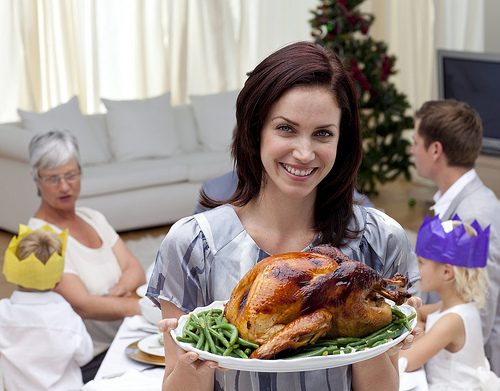
At Robson Dentistry, we love to celebrate the holidays with vigor! Dr. James Robson would love to share some unique ways of celebrating Thanksgiving from beyond the East Lyme, CT area to the national level!
When Americans sit down to dinner on the last Thursday of November, the day that Abraham Lincoln designated as the day on which Thanksgiving would be celebrated, they do so thinking that the first Thanksgiving feast was held at Plymouth in 1621. According to National Geographic, the Spanish explorer Francisco Vásquez Coronado and his men celebrated a feast of Thanksgiving in Texas in 1541, giving Texas the distinction of being the first place where Thanksgiving was celebrated.
Different Types of Celebrations
Native Americans had rituals around which they celebrated in hopes of ensuring a bountiful harvest. The Cherokees had a Green Corn Dance that they did for this very purpose. The Pilgrims (not to be confused with the Puritans,) rejected any type of public religious display. They held a three-day long non-religious Thanksgiving feast. Although they said grace, the focus of their celebration was on feasting, drinking alcohol (they did have beer,) and playing games.
The Pilgrims at the Plymouth Plantation celebrated a different day of Thanksgiving in 1623. Plagued by a crop-destroying drought, the settlers prayed for relief. They even fasted. A few days later, they got the rain they so desperately needed. Soon thereafter, they received another blessing when Captain Miles Standish came with staples they couldn't otherwise get. He also told them that a Dutch supply ship was en route. In gratitude for the abundance of good fortune, the Plymouth settlers celebrated a day of prayer and Thanksgiving on June 30, 1623.
The Story of Squanto
No discussion of Thanksgiving is complete without a discussion of Squanto, or Tisquantum, as he was known among his people, the Patuxet Indians. It is believed that he was born sometime around 1580. As he returned to his village after a long journey, he and several other Native Americans were kidnapped by Jamestown colonist, Thomas Hunt. Hunt put them on a ship heading to Spain where they were to be sold into slavery.
As fate would have it, some local friars rescued him and many of the other kidnapped natives. Squanto was educated by the friars. Eventually, after asking for freedom so he could return to North America, he ended up in London where he spent time working as a ship builder. By 1619, he was finally able to get passage on a ship headed to New England with other Pilgrims.
Upon arriving at Plymouth Rock, he learned that his entire tribe was wiped out by diseases that accompanied earlier settlers from Europe. In gratitude for passage on their ship, he helped them set up a settlement on the very land where his people once lived. They called the settlement Plymouth. Since they knew nothing about how to survive, let alone how to find food, Squanto taught them everything, from how to plant corn and other crops, how to fertilize them, how and where to get fish and eels and much more.
After a devastating winter during which many settlers died, thanks to Squanto's teaching, they had an abundant harvest. After that harvest, they honored him with a feast. It is this feast of 1621 which was celebrated between the Pilgrims and Wampanoag Indians that is widely considered the first Thanksgiving celebration.
About the Meal of the Plymouth Settlers
Surviving journals of Edward Winslow that are housed at Plymouth Plantation indicate that the first Thanksgiving feast was nothing like what Americans eat today. The meal consisted of venison, various types of wild fowl (including wild turkey,) and Indian corn. There were no cranberries, stuffing, pumpkin pie, potatoes, or any of the other “traditional” foods that appear on modern menus.
Today, Thanksgiving is celebrated on the fourth Thursday of November, the day that Abraham Lincoln designated as the holiday. It is still a day of feasting, and for some, a day of prayer and thanksgiving. For others, it is a celebration of gathering, especially for families. Still others may celebrate in entirely different ways, including watching college football bowl games, or by playing family games.
If you ever wonder why you're so tired after the Thanksgiving meal, it's because turkey contains an amino acid, tryptophan, and it sets off chemicals whose chain reaction combine to make people sleepy.



 Website Powered by Sesame 24-7™